Stepping in
Stepping into the ring: the lottery
At the Shinjuku sumo show, six guests per show can face a wrestler, chosen by lottery. What the challenge involves and how a bout is decided.
Book the Shinjuku sumo show ↗Quick answer
At the Shinjuku sumo show, up to six guests per show can challenge a wrestler, and if more guests want to than there are places, participants are selected by lottery. Chosen guests put on a traditional sumo outfit and step into the ring after the matches. Being picked is luck, so book for the show, not for a guaranteed turn.
How the challenge works
The organiser limits the sumo challenge to six guests per show and says participants are selected by lottery. Challenging a wrestler is described as a limited opportunity, with a lottery if too many guests apply. After the matches, guests suit up in a traditional sumo outfit and step into the ring. That is all the format promises: a place is a chance, not a guarantee.
How a bout is decided
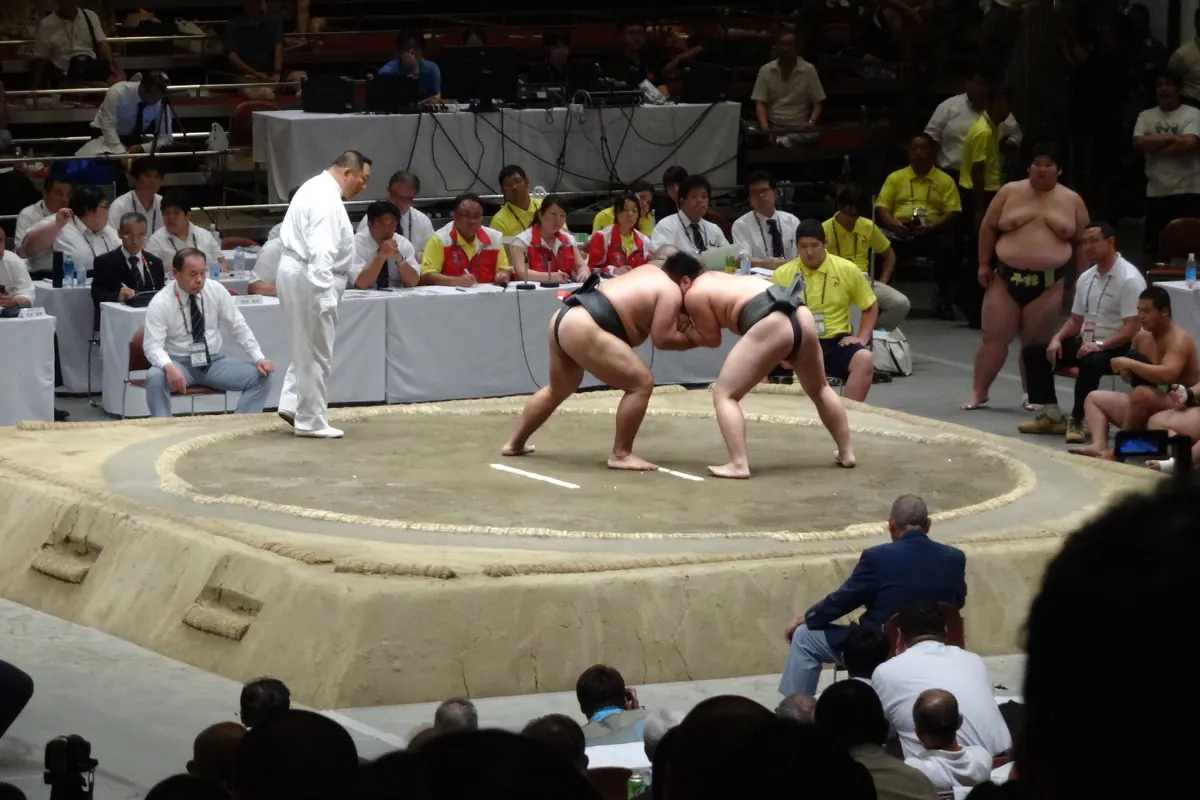
In sumo the loser is the wrestler who is pushed out of the ring, or whose body, apart from the soles of his feet, touches the clay inside it. Wikipedia says most bouts last under a minute and often only seconds. The ring, the dohyō, is 15 shaku, about 4.55 metres, in diameter and edged with rice-straw bales. If you step into the show's ring, that is the idea you are playing with.
Sumo for amateurs
Sumo is not only professional. Wikipedia says it is practised in Japan in colleges, high schools, grade schools and company teams, with open tournaments too, and that the International Sumo Federation was founded in 1992. Amateur events use weight classes. A show's challenge is closer to a playful demonstration than to either, and the wrestler is a professional, so treat the bout as a game that the MC runs.
Words you will hear in the ring
Three terms help. The dohyō is the ring itself. The gyōji is the referee, who wears garb very similar to a Shinto priest's. Tachi-ai is the initial charge, the moment both wrestlers launch at each other to start a bout. Wikipedia's glossary also lists shikiri, the pre-bout period in which wrestlers stare each other down, crouch repeatedly and throw salt. If the MC uses these words, you now know what to watch for.
What reviews describe
Reviews of the show mention guests of all ages taking part, including a child who was picked, and plenty of laughter. They also mention an MC who keeps the room involved. Not everyone is chosen, and a few reviewers would have liked more bouts and less talk. Go in hoping for the ring but happy to watch, because the hour is worth it either way and the photographs with the wrestlers are included for everyone.
Who this isn't for
Skip the show if a guaranteed turn in the ring is the point, because the lottery decides. It is also not for guests who do not want to be picked from the audience: watching is enough, and only six guests per show go into the ring.
Frequently asked questions
How many guests can challenge a wrestler?
Up to six per show.
How are challengers chosen?
By lottery, if more guests want to take part than there are places.
What do chosen guests wear?
A traditional sumo outfit, put on after the matches before stepping into the ring.
Can I book a guaranteed turn?
No. The challenge is limited and chosen by lottery.
How is a sumo bout won?
By pushing the opponent out of the ring, or by making any part of him except the soles of his feet touch the clay.
Sources